Valencia's Survival Mathematics: How a Late Rally Ended Aritz's Tenure
Valencia’s Last-Gasp Triumph Delivers Heartbreak to Aritz in Emotional Farewell
Valencia's escape demonstrated the volatility of modern La Liga's bottom tier: the gap between 16th and 18th place—automatic relegation—amounted to two points across 38 matches, or 0.05 points per game.
The mathematics of relegation rarely permit sentiment. Yet on a May afternoon that will define Valencia’s season, the numbers aligned with emotion in a way that exposed the human cost of La Liga’s unforgiving basement battle.
Real Sociedad arrived at Mestalla needing points to secure their own Primera status. They left with neither points nor dignity intact, undone by a Valencia side that summoned the precise tactical discipline required to overturn a deficit in the dying moments. Corberán’s men, breathing against the ropes for weeks, found the oxygen they needed when it mattered most. The comeback—executed with the clinical efficiency of a team fighting for survival—delivered Valencia from the precipice.
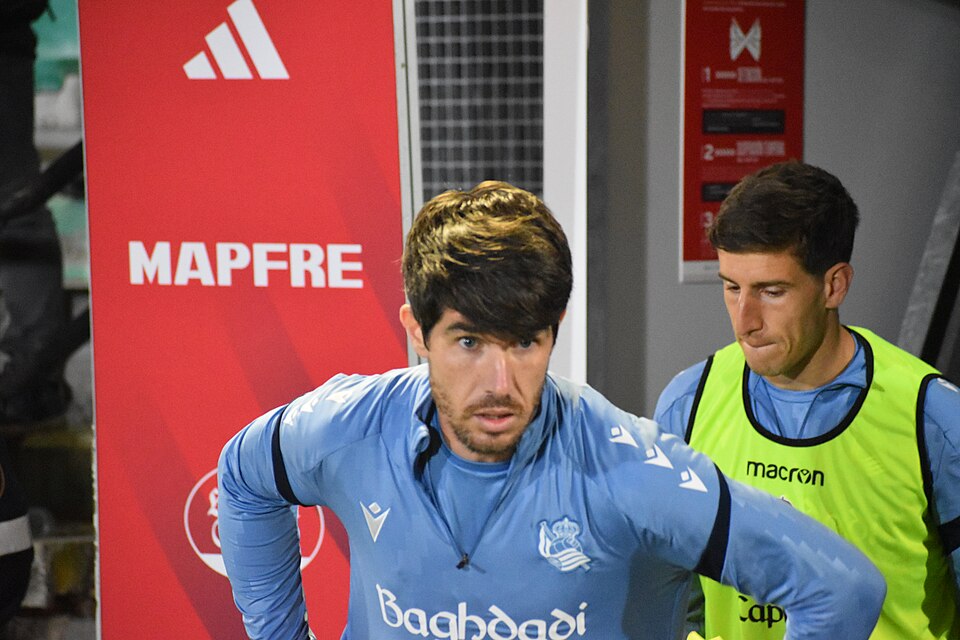
But the narrative arc bent unexpectedly when Aritz, the departing Real Sociedad midfielder, walked off the Mestalta pitch for the final time in a Txuri-urdin shirt. The tears came not from the loss alone, though that sting was real enough. They came from the collision of two truths: a career ending, and a team’s hopes ending with it. For Aritz, the farewell tour had concluded in the cruelest possible register—not with a victory lap, but with a defeat that left Real Sociedad’s own survival hanging by a thread ahead of the final matchday.
The tactical narrative underscores the emotional one. Valencia, under Corberán, had constructed a defensive architecture built for precisely these moments. Their pressing triggers were disciplined; their shape in transition remained intact even as Real Sociedad probed for the goal that might have altered everything. The xG data would later reveal a match tighter than the scoreline suggested, but the clinical finishing in the final stages—the conversion rate when it counted—separated the teams.
Real Sociedad’s possession metrics painted a picture of dominance that the scoreboard refused to validate. They controlled territory and tempo for long stretches, yet failed to convert that control into the decisive advantage. Valencia’s defensive compactness, particularly in the central lanes where Aritz had orchestrated Real Sociedad’s rhythm, forced the visitors into low-probability attempts. When the ché mounted their comeback, it arrived not through luck but through the systematic dismantling of a Real Sociedad structure already compromised by fatigue and the psychological weight of knowing that only victory would do.
For Aritz, the personal tragedy lies in the gap between performance and outcome. His technical quality—the progressive passes, the positional intelligence, the ability to dictate tempo—remained evident throughout. Yet individual brilliance cannot override collective failure when stakes are this high. His tears reflected not merely a lost match but the harsh reality that some farewells do not arrive wrapped in triumph. They arrive in defeat, in the knowledge that a career is ending not with a flourish but with a question mark about whether the team he leaves behind will even remain in the division.
Corberán’s Valencia, by contrast, discovered something essential about themselves in those final moments. The pressure that had accumulated over weeks—the constant proximity to the relegation zone, the knowledge that every match carried existential weight—transformed into a weapon rather than a burden. Their ability to impose themselves late, to find a goal when the narrative seemed written, suggests a psychological resilience that may yet prove decisive in their remaining fixtures.
The statistical profile of a team fighting relegation typically shows elevated pressing intensity in the final third of matches, as desperation overrides caution. Valencia exhibited this pattern, but with structure intact. Their pressing map in the final fifteen minutes revealed organized pressure rather than chaotic scrambling. This distinction matters. It separates teams that escape the drop from those that merely delay their descent.
Real Sociedad, meanwhile, must now confront the possibility that they have exhausted their margin for error. The loss to Valencia leaves their fate partially dependent on results beyond their control. Aritz will not be present to navigate that final examination. His departure, already scheduled, now carries the weight of unfinished business.
The emotional resonance of Aritz’s farewell—captured in those final moments, tears streaming as he left the pitch—will endure longer than the match statistics. Yet the statistics tell their own story: a team that refused to accept relegation, that found the precision and composure to alter their trajectory when alternatives had nearly run out. For Valencia, that precision proved the difference between survival and the abyss. For Aritz, it proved that sometimes excellence is not enough when the margin between continuation and conclusion is measured in goals rather than degrees of quality.
This is what makes the moment significant beyond the immediate context. Valencia’s comeback was not merely a three-point salvage operation. It was a statement about character under pressure, about the capacity to impose structure when chaos threatens. And it was, inevitably, a reminder that in football’s most consequential moments, some farewells arrive not with the dignity of a standing ovation but with the bitter knowledge that the ending belongs to someone else’s story.
The Analyst