Aritz's Exit: A Heartfelt Goodbye to Real Sociedad's One Club Dreams
Aritz's Exit: A Heartfelt Goodbye to Real Sociedad's One Club Hopes
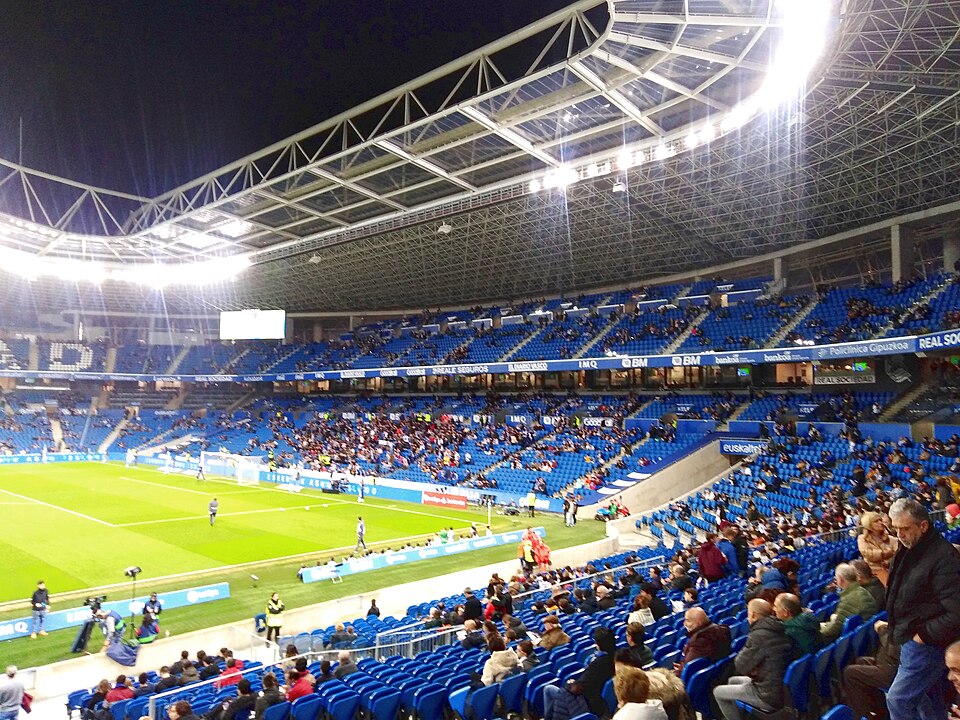
For a generation of Real Sociedad supporters, Aritz was not simply a defender; he was institutional memory, a living link to better days and a symbol of what it meant to belong somewhere in an era of constant upheaval.
There’s a particular kind of heartbreak that only comes when a player who has spent his entire career at one club walks away for the final time. Real Sociedad fans experienced that ache on what should have been an ordinary Sunday at Anoeta, watching Aritz of Beasain take the pitch knowing it would be his last appearance in txuri-urdin. The club’s refusal to renew his contract didn’t just end a chapter—it closed a book that many in San Sebastián had hoped would never have an ending.
In an era when La Liga’s biggest clubs hoard talent like dragons guarding gold, when young players are shuffled between academies and loan spells across continents before they’re old enough to vote, Aritz represented something increasingly rare: loyalty, rootedness, and the kind of football that grows from genuine connection to place. He wasn’t the most spectacular player to ever wear Real Sociedad’s shirt. He wasn’t the one who would light up ESPN highlight reels or command eight-figure transfer fees. But he was theirs—completely, unreservedly, from academy to retirement.
The decision not to renew feels particularly cruel in its ordinariness. There’s no dramatic scandal, no acrimonious dispute, no clash of egos that might make the separation feel inevitable. Instead, it’s the quiet logic of modern football: a player entering the twilight of his career, a club looking toward the future, numbers that don’t quite add up in the spreadsheets that increasingly dictate sporting decisions. It’s rational. It’s sensible. It’s also profoundly sad.
What makes Aritz’s departure resonate beyond the usual end-of-career farewells is what it says about Real Sociedad’s current moment. The Basque club has always positioned itself as something different in La Liga—not a superpower like Real Madrid or Barcelona, but a institution built on principles, on academy excellence, on the idea that you could be competitive and principled simultaneously. Players like Aritz were the living embodiment of that philosophy. One club men aren’t just players; they’re symbols of institutional continuity and fan identity.
For Real Sociedad supporters, there’s also a deeper anxiety lurking beneath the sadness. The club’s recent seasons have been turbulent by their standards. While they’ve maintained their status as a respectable La Liga side, they’ve fallen short of the European ambitions that seemed within reach just a few years ago. The departure of Aritz without even the courtesy of a final contract extension feels like another small erosion of what made the club special—another signal that even Real Sociedad now operates according to the cold calculus of modern football economics.
The timing, too, stings. In May, when the season winds down and players become philosophical about their legacies, it’s natural to reflect on what might have been. Aritz’s last appearance at Anoeta should have been a moment of celebration, a chance for the club to honor a servant who gave everything for the shirt. Instead, it became a farewell nobody quite wanted to say.
There’s a lesson here for La Liga more broadly. The league’s identity has always rested partly on the existence of these kinds of relationships—players bound to clubs by something more than commercial interest, fans connected to players through years of shared experience. When those relationships dissolve purely for economic reasons, when loyalty becomes a luxury only the very young or very famous can afford, something essential is lost.
Real Sociedad will move forward. They’ll sign new players, pursue new ambitions, and continue their place in La Liga’s upper-middle tier. But the departure of Aritz represents a small but real loss—not just of a player, but of an idea. The idea that you could spend your entire career at one club, that you could be defined by that relationship, that belonging to a place could matter more than chasing the biggest contract or the most prestigious destination.
For the fans who watched him grow from academy prospect to experienced professional, who cheered him through victories and stood by him through defeats, Aritz’s exit is a reminder of football’s fundamental cruelty: that even the most meaningful relationships eventually end, and sometimes they end not with a bang but with a quiet administrative decision and a final Sunday at the stadium.
That last appearance at Anoeta was, in the end, exactly what it should have been—a goodbye. Real Sociedad’s one club man finally had to be one club man no longer.
El Hincha