Bordalás Honored as Adoptive Son of Getafe: What This Means for Their La Liga Aspirations
Bordalás Honored as Adoptive Son of Getafe: What This Means for Their La Liga Aspirations
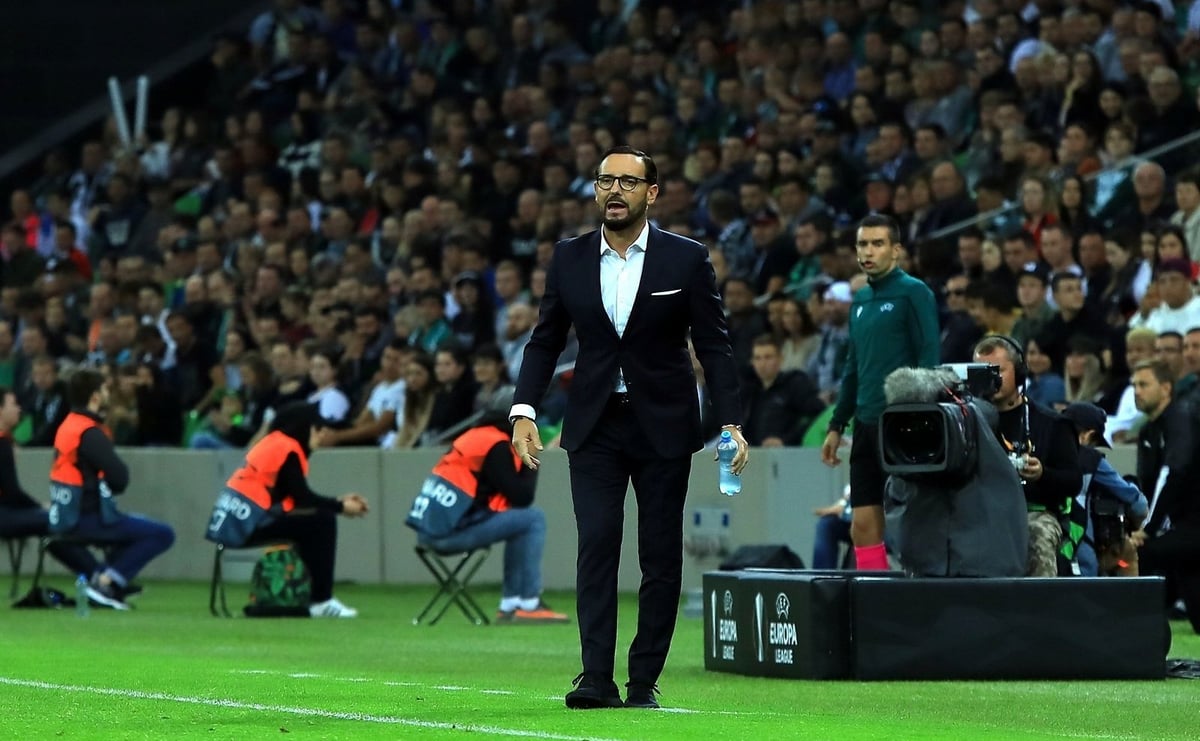
Getafe will never outspend Real Madrid or Barcelona. They will never attract the world's most coveted talents through the promise of continental glory or astronomical wages. What they could do, under Bordalás, was build something different: a machine.
The Alicante native lived an afternoon of pure emotion alongside the azulona faithful. José Bordalás, the man who has become synonymous with Getafe’s modern identity, was officially recognized as an adoptive son of the club—a ceremony that transcended the typical pageantry of football honors. Yet beneath the ceremonial warmth lies a question that cuts to the heart of Getafe’s ambitions: what does this recognition mean for a club perpetually caught between survival and aspiration in La Liga?
Bordalás arrived at Getafe in 2016 as a relative unknown outside Spanish football circles. The club was languishing in the Segunda División, a fallen giant searching for direction. What followed was a remarkable resurrection. Over a decade, Bordalás transformed Getafe from a club fighting for promotion into a consistent La Liga fixture, a team that earned the respect of Spain’s elite through tactical discipline, organizational excellence, and an almost obsessive commitment to defensive solidity. That transformation didn’t happen by accident—it happened because Bordalás understood something fundamental about Getafe’s place in the Spanish football ecosystem.
Getafe will never outspend Real Madrid or Barcelona. They will never attract the world’s most coveted talents through the promise of continental glory or astronomical wages. What they could do, under Bordalás, was build something different: a machine. A team whose identity was so clearly defined, whose tactical principles were so rigorously applied, that they could compete against any opponent on any given Sunday. This wasn’t romantic football. It wasn’t the flowing, possession-based ideal that dominates Spanish football discourse. But it was effective, it was sustainable, and it was authentically Getafe.
The honorary title of adoptive son represents more than sentimental recognition. It’s an acknowledgment that Bordalás has become inseparable from the club’s DNA. He didn’t parachute in with grand promises before moving on to greener pastures. He stayed. He built. He believed in Getafe when the club had every reason to believe only in itself. That commitment—rare in modern football where managerial tenures often resemble temporary assignments—carries profound implications for how the club should think about its future.
Yet here’s where the narrative becomes complicated. Getafe’s current La Liga position reflects the paradox of their model. They remain competitive, still capable of securing respectable finishes and the occasional European qualification. But they also remain trapped in a cycle of consolidation rather than genuine advancement. The gap between Getafe and the established elite hasn’t narrowed in recent seasons; if anything, it’s widened as clubs with deeper resources have invested more aggressively in squad development.
Bordalás’s honor arrives at a moment when Getafe faces an existential question about their trajectory. Can this club, built on defensive organization and tactical discipline, evolve into something more? Or are they destined to remain what they’ve been: a well-organized, respectable mid-table team that occasionally punches above their weight but never quite breaks through to consistent title contention or regular European football?
The recognition itself suggests the club values continuity and institutional memory. In an era where managerial changes happen with dizzying frequency, where loyalty is often treated as a quaint relic, Bordalás has earned something precious: the trust of an entire organization and fanbase. That matters. It provides stability, predictability, and a clear vision that extends beyond individual seasons.
But stability alone doesn’t guarantee progress. Getafe’s supporters know this better than most. They’ve watched their team achieve remarkable things within defined limits—remarkable because the limits are so severe. The club operates with financial constraints that would cripple lesser organizations. Their academy, while improving, cannot yet produce the volume of elite talent that would allow them to compete for championships. Their commercial revenue pales beside Spain’s traditional powerhouses.
What Bordalás has proven is that these constraints need not mean irrelevance. Getafe has become a model of efficiency, a club that extracts maximum value from limited resources. But the question facing the club now is whether efficiency alone is enough. Do they want to remain the best-organized mid-table team in Spain, or do they want to take genuine risks—both tactical and financial—to break into the upper echelon?
The honor bestowed upon Bordalás suggests Getafe values what he’s built. But it should also serve as a moment for reflection. Has his model reached its ceiling? Can tactical excellence and organizational discipline, no matter how refined, overcome the fundamental economic disparities that define modern La Liga? Or is there still room for Getafe to evolve, to add layers of ambition to the foundation Bordalás has constructed?
These aren’t questions with easy answers. What’s certain is that Bordalás’s recognition as an adoptive son comes laden with expectations. The club and its supporters have invested enormous emotional capital in his vision. That investment has paid dividends in stability and respectability. Whether it can translate into something more—genuine title contention, consistent European football, a place among La Liga’s genuine elite—remains the central drama of Getafe’s immediate future. The honor is well-deserved. Now comes the harder part: determining whether it represents a beginning or a ceiling.
El Hincha