Soria Questions Elche's Tactics Post-Match: A Winning Strategy or Just Time-Wasting?
Soria Questions Elche's Tactics Post-Match: A Winning Strategy or Just Time-Wasting?
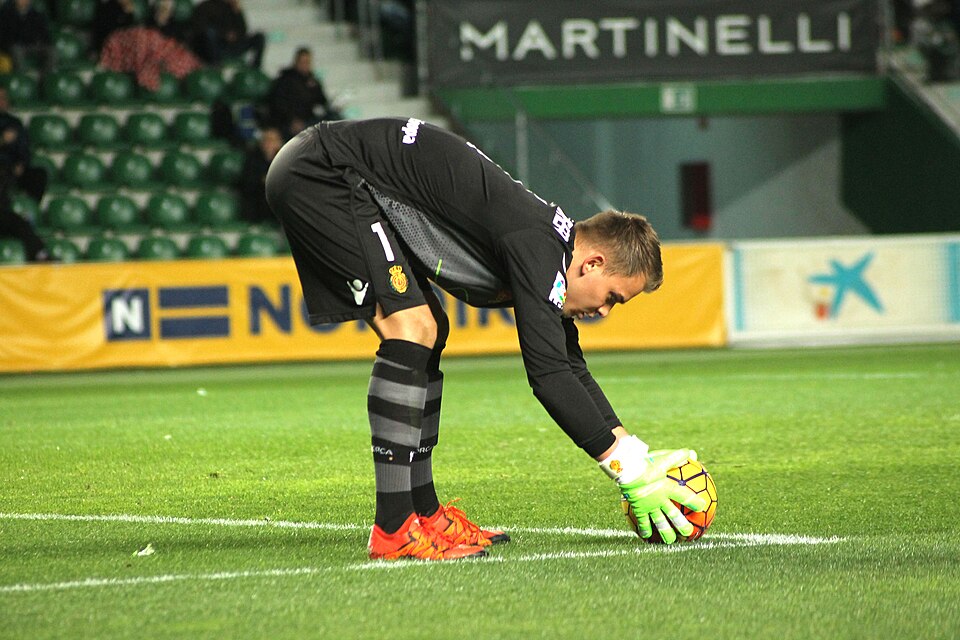
When players start publicly questioning the manager's methods—even obliquely, even respectfully—it's rarely a sign that everything is functioning as it should.
There’s a particular kind of tension that emerges when a goalkeeper—traditionally the last line of defense, the keeper of secrets—decides to air grievances about his own team’s approach to the game. That moment arrived at the final whistle of Elche’s latest encounter, when Edgar Soria stepped before the microphones and delivered a message wrapped in diplomatic language but sharp enough to draw blood: Elche had managed the match well, yes, but they’d done it through time-wasting and long balls. And then came the real sting: he wasn’t sure if their manager, Eder Sarabia, would be content with what he’d just witnessed.
On the surface, this reads like a goalkeeper’s post-match observation—the kind of thing that gets filed away in the back pages and forgotten by Tuesday. But dig deeper, and Soria’s comments expose something far more troubling about Elche’s current predicament. They reveal a fundamental disconnect between what the team is doing on the pitch and what their own players believe the football should look like. More crucially, they suggest that even within the squad, there’s uncertainty about whether the manager’s tactical blueprint is the right one.
Elche’s season has been a study in survival. They’ve scraped results together through pragmatism, through defensive solidity, through the kind of grinding football that doesn’t win converts but does win points. In a league where Barcelona and Real Madrid trade blows at the summit and the middle table teams jostle for European qualification, Elche operates in a different ecosystem entirely. They’re fighting to stay up, fighting to avoid the drop, and in that context, a win is a win—regardless of how it arrives. Yet Soria’s intervention suggests that this survival-at-all-costs mentality may be corroding something essential within the dressing room.
The goalkeeper’s critique of time-wasting and direct play is particularly revealing. These are tactical instruments that Sarabia has clearly embraced as part of his philosophy at Elche. When you’re the smaller team, when your squad lacks the technical brilliance of the elite sides, you compress the game. You make it ugly. You frustrate your opponents. You run down the clock. It’s not pretty, but it works. Countless managers have built careers on this approach. Yet Soria’s willingness to publicly question it—even gently, even with respect—suggests that the players themselves may be tiring of this methodology.
There’s also a deeper cultural question here. Spanish football, for all its tactical evolution, still carries within it a certain expectation of quality, of possession-based football, of building from the back. Elche’s fans, like supporters across La Liga, want to see their team play with some semblance of style. They want to see the ball moved with purpose, combinations constructed, chances created through intelligence rather than just launching it long and hoping. When a goalkeeper—a player who sees the entire pitch unfold before him, who understands the game’s rhythm perhaps better than anyone on the field—starts questioning whether his team’s approach aligns with what the manager wants, it raises uncomfortable questions about coherence and direction.
Sarabia came to Elche with a reputation as a coach who could organize a team, who could extract results from limited resources. His time at Sevilla suggested someone who understood La Liga’s nuances, who could work within constraints. But Soria’s comment—delivered with just enough ambiguity to avoid outright rebellion—hints that there may be a gap between Sarabia’s intentions and Elche’s execution. Either the manager is explicitly asking for this brand of football and the players are uncomfortable with it, or there’s a misunderstanding about what the tactical approach should be. Neither scenario is ideal.
The timing of this intervention is also significant. We’re in May now, approaching the business end of the season. If Elche are still fighting for their lives at this stage, then the margin for error is razor-thin. This is not the moment for philosophical debates about playing style. This is the moment for results, pure and simple. Yet Soria’s willingness to speak out suggests that the psychological strain of playing this way—week after week, grinding, time-wasting, launching it forward—may be taking a toll. Players need to believe in what they’re doing. They need to feel that the tactical approach, however unglamorous, is working toward something meaningful.
The question now is whether Sarabia will address this internally or whether Soria’s comments will fester. In the short term, if Elche continue to pick up points, the issue may be buried. Winning covers a multitude of sins. But if results start to slip, if the team’s performance dips, then this conversation will resurface. And when it does, it won’t be framed as a goalkeeper’s observation but as evidence that the manager had lost the dressing room.
For now, Elche will take the win. They’ll move on to their next fixture, and Sarabia will likely reinforce the same tactical principles that have kept them competitive. But Soria’s words hang in the air like a warning. In football, when players start publicly questioning the manager’s methods—even obliquely, even respectfully—it’s rarely a sign that everything is functioning as it should. It’s a sign that cracks are forming. And at a club fighting for survival, cracks can quickly become chasms.
El Hincha